
The IDO Help Desk: For Anyone Who Gets Stuck in the Digital World
In a society that is rapidly digitizing, many people find it difficult to keep up. Fortunately, there is the Digital Government Information Center (IDO). This is a place where residents can go for free to get help with handling online (government) matters. For example, applying for a DigiD, rent and healthcare subsidies, or the AOW pension, or renewing a driver’s license. Mariëlle van den Diepstraten (Basic Skills Consultant and Coordinator of the Digi-Taalhuis) sees every day how the IDO center helps people navigate the digital world of government services.
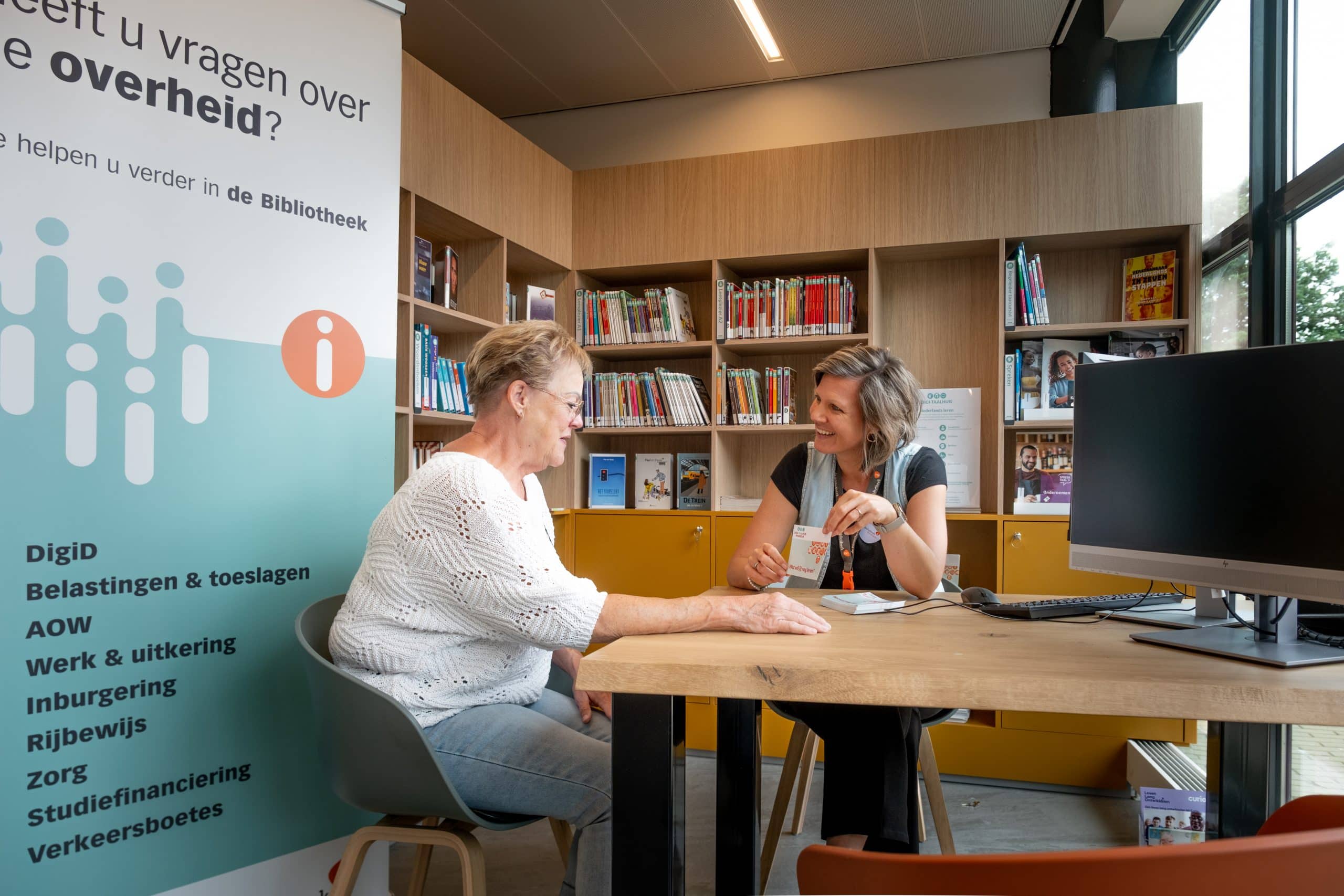
“The IDO Help Desk is there for anyone who gets stuck in the digital world,” says Mariëlle. “Whether it’s applying for a DigiD, making an appointment with the city, or installing an app on your phone—we’ll help you get started.”
The IDO originated from a nationwide collaboration between the government and libraries. The first IDO center opened in the municipality of Moerdijk about five years ago. There are now three of them: in Zevenbergen, Helwijk/Willemstad, and Fijnaart. We have literally moved closer to the people. In Helwijk/Willemstad, the IDO center is located in the community center, and in Fijnaart, it’s even in an elementary school. That makes it more accessible.
What kinds of requests for help do we receive?
The most frequently asked questions at the IDO service points in Moerdijk are about DigiD: how to apply for it, activate it, and use it. But we also regularly get questions about practical matters such as making an appointment at city hall, using apps on a phone, printing documents, and searching municipal websites. We even get questions about public transportation and neighborhood buses. Mariëlle: “We’ve noticed that the number of questions at the IDO centers keeps growing every year. That’s wonderful, of course, because ultimately we want every resident to know where to find us. Everyone is also welcome at the IDO center, regardless of age or how good or bad your digital skills are. We do notice, however, that residents between the ages of 40 and 65 in particular come to us with questions. That’s also the group that frequently deals with digital government matters, such as applying for benefits, arranging their retirement, or logging in with DigiD. We can also refer residents with specific requests for help to courses where they can further develop their digital skills. For example, Digisterker or the Klik&Tik course.”
Making a difference in people's lives
The impact of the IDO center goes beyond just practical assistance. Mariëlle shares the story of a resident from Helwijk who came in with a question: “She was fairly tech-savvy, but had trouble with DigiD. She stopped by a few times, and eventually moved on to a course. Now she handles everything on her own.”
Here’s another example: someone who enrolled in the course because of a passion for cooking. “He discovered YouTube during one of the courses and started looking up recipes. Now he spends every day collecting the best recipes online so he can make them at home. It’s wonderful to see how digital skills can enrich someone’s life.”
The courses are flexible: people can join whenever they want and stop whenever they're ready. The social aspect of the courses is also very important—the participants help each other and can brainstorm together about digital issues.
Digital Inclusion: A Social Necessity
According to Mariëlle, digital inclusion is essential. “We live in a digital society, but not everyone is digitally literate. Organizations need to realize that.” She compares the digital world to a highway: “fast and efficient, but there must always be a paper-based emergency lane for those who need it.”
She emphasizes that organizations need to be aware of this gap. “A family doctor who can only be reached through an app, or a municipality with a digital registration kiosk—that doesn’t work for everyone. The IDO point helps connect those worlds.”
The Future of the IDO Center
The role of the IDO Point will only continue to grow. As the government continues to digitize its services, the IDO Point will become an essential link in the service chain. “It’s become indispensable,” says Mariëlle. “We respond to trends and needs, and provide a place where people can help one another—from parking apps to bike routes.”
The IDO Center is therefore not only an information center, but also a meeting place, a learning environment, and a stepping stone to digital self-reliance.
Want to know more?
There are three IDO locations in the municipality of Moerdijk:
- IDO location in Zevenbergen: library, 15 Pastoor van Kessellaan (during library hours)
- IDO location in Fijnaart: De Fijne Aarde Elementary School, Prinses Irenestraat 3 (first Wednesday of the month: 8:30–10:00 a.m.)
- IDO Location Helwijk/Willemstad: De Blokhut, Prins Bernhardplein 2 (3rd Wednesday of the month: 10:00–11:30 a.m.)
For more information, please visit the West Brabant Library website.
Want to contact an IDO office?
Please send an email to: digitaalhuis@bibliotheekwb.nl.
Or call or send a WhatsApp message to: 06 18 05 22 48.