
Study on the cold network: findings and next steps
The municipality and Woonkwartier are exploring how homes in Helwijk can be heated without natural gas in the future. As part of this, we have examined whether a cooling network is a suitable solution. In a cooling network, multiple homes share a single system, with a heat pump in each home.
The district cooling network under consideration appears to be technically feasible. However, based on the current design, it is not expected to be affordable for residents. Over the coming months, we will investigate whether the costs can be reduced. No decision has been made yet.
Below, you can read about what residents consider important, the findings of the study, and how the district cooling network works.
What do residents consider important when it comes to natural gas-free living?
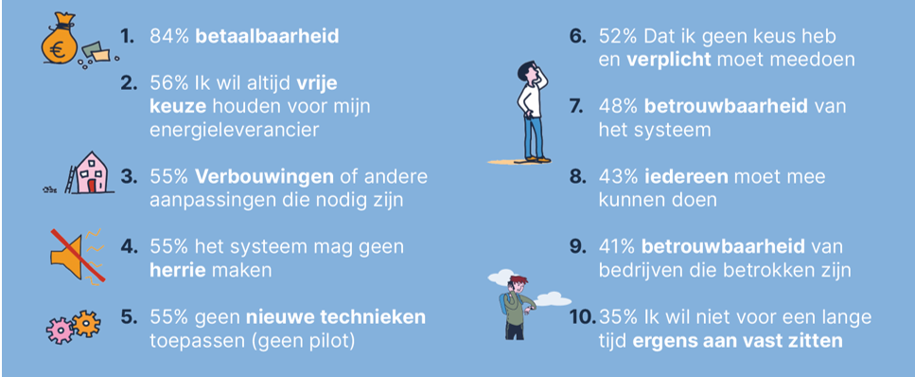
In early 2025, we invited all households in Helwijk to complete a questionnaire about natural gas-free living. We wanted to know what residents’ wishes and concerns were. This will allow us to take them into account when researching and comparing solutions for heating without natural gas. In total, the questionnaire was completed 95 times.
Participants’ knowledge of natural gas-free heating systems varies. Many participants are concerned about the costs and the modifications required in their homes. Affordability, reliability, and future-proofing are major considerations. Freedom of choice and preventing noise pollution are also important.
We use these results to assess which heating solutions are suitable for Helwijk and what kind of support residents need. The questionnaire does not yet imply a choice of a specific system.
Why did we study a cold network?
A district cooling network seemed to align well with what residents value. No outdoor unit is required per home, and the system may also be able to provide cooling. Residents can choose their own electricity provider: the heat pump in their home uses electricity to generate heat. The purpose of the study was to determine whether it is affordable and what is needed to install it in the neighborhood and in the homes.
What were the findings of the study, and how do we move forward?
The cold network appears to be technically feasible. However, based on the design we examined, we do not expect it to be affordable for residents.
The installation of piping and shared systems is particularly expensive. In addition, each home will still need its own heat pump. Over the long term, the total costs are expected to be higher than those of a standalone heat pump that extracts heat from the outside air.
No decision has been made yet. Over the coming months, we will explore whether the district cooling network can be made more affordable, for example through modifications, subsidies, or other ways to fund it.
Is it still too expensive? If so, we won’t be moving forward with this joint system for the time being. We’ll then look into solutions on a per-home basis and appropriate support for tenants and homeowners. The insights from the study will help us focus our search for an affordable alternative to natural gas.
You don't need to make a decision about your connection right now. As soon as we have more information, we'll let you know and begin discussions with residents. Would you like to start saving energy now? Visit the energy help desk for information and assistance.